Industrial Aluminium Platforms & Ladders: The Complete AU Buyer's Guide
8th Jun 2026
Choosing the right aluminium access equipment for your worksite involves more than picking a ladder off a shelf. The right platform, ladder or stair solution affects how safely your team works at height, how productive your operations are, and whether your site meets the requirements that insurance and site management expect.
This guide walks through the full range of aluminium work platforms, access ladders, stairs and specialty solutions available in Australia. Whether you are outfitting a warehouse, a manufacturing floor, a transport depot or a remote industrial site, the information below will help you narrow down the right category and understand what to look for.
What Are Aluminium Work Platforms?
Aluminium work platforms are elevated, stable working surfaces that allow tradespeople and workers to perform tasks at height. Unlike ladders, which provide access but not a working surface, platforms give workers a secure deck to stand, turn and operate from. This distinction matters in environments where the task requires two hands, sustained positioning or repeated movement.
Aluminium is the material of choice for most industrial access equipment in Australia for several practical reasons. The combination of light weight and structural rigidity means platforms can be moved and repositioned without mechanical assistance, while still handling the loads that industrial worksites demand. The material also holds up well in environments with moisture, chemicals or outdoor exposure.
The category covers a broad range of products, from compact folding platforms suited to a single user doing maintenance tasks, through to large modular structures assembled on-site for extended access campaigns. Understanding which type fits your application is the starting point for any purchase decision.
Adjustable and Fixed-Height Work Platforms
Height-adjustable work platforms are the most commonly specified type for general industrial and trade environments. The platform deck height can be set at different positions within the unit's range, which makes a single unit usable across tasks at varying heights rather than requiring different equipment for each job.
The adjustable work platforms range covers single-person units through to heavy-duty models suited for higher loads, including platforms with handrails, self-closing gates and non-slip deck surfaces. Selection depends on the working height required, the load the platform needs to carry, and the mobility requirements of the environment.
Fixed-height platforms are simpler and more rigid than adjustable models, and are often the better choice where the task height is consistent and the platform will remain in one location for extended periods. They are common in production line environments and assembly areas where conditions do not change day to day.
Modular Access Platforms
Where a single platform unit is not enough to cover the span or configuration required, modular access platforms allow multiple sections to be combined into a larger structure. This approach suits situations such as access along a wall, around a machine or across an irregular layout where a single unit would require repeated repositioning.
Modular systems are specified more often in manufacturing, maintenance and civil environments where access requirements are complex or change over time. The ability to reconfigure the layout without buying new equipment represents a significant operational advantage.
Folding Platforms
Folding aluminium platforms are designed for environments where storage space is limited or the platform needs to be transported between locations regularly. When folded, these units have a compact footprint that allows them to be stored in a van, ute tray or small storage area, then deployed quickly when needed.
The folding platforms in the range are suited to electrical, plumbing, HVAC and general maintenance trades where the platform moves with the job rather than staying in a fixed location.
Truck and Vehicle Access Platforms
Access to the top surfaces of trucks, tankers and other large vehicles is a routine requirement in transport depots, fuel facilities, chemical processing plants and agriculture. The height involved means that informal access methods such as climbing on tyres or using general-purpose ladders create unacceptable risk. Dedicated truck access equipment is designed specifically for this environment.
The truck access platforms range covers fixed and mobile platform configurations that position workers at the correct height for loading, inspection and maintenance tasks on standard truck and trailer configurations. Key considerations when specifying truck access equipment include the vehicle types serviced, the frequency of use, whether the platform needs to accommodate multiple vehicle heights and whether the installation is permanent or portable.
Cantilever Work Platforms
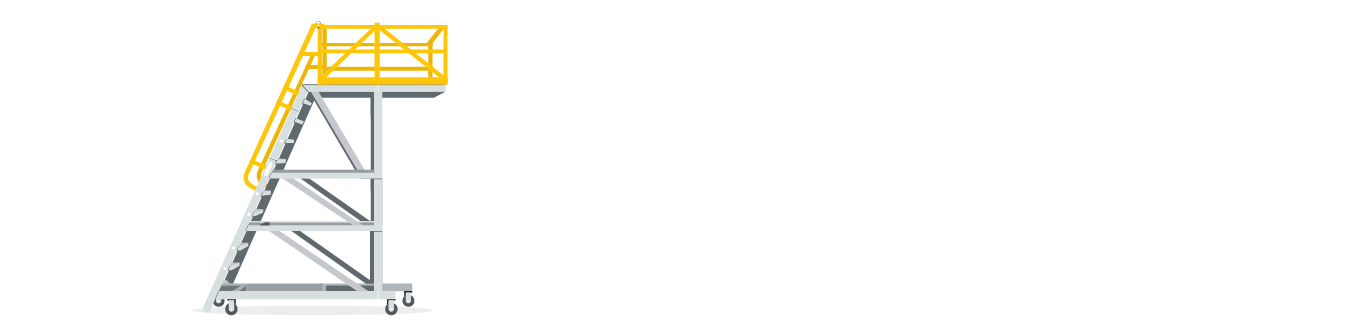
A cantilever platform extends the working deck horizontally so that it reaches over or alongside equipment, vehicles or machinery where the base structure cannot be positioned directly underneath the work point. This configuration is particularly relevant for aircraft maintenance, production line work, vehicle servicing and any application where the work area is not directly above where a standard platform would stand.
The cantilever work platform range is built around the Star Aluminium CLP series, offering step configurations across a wide range of working heights. The cantilever design allows workers to reach positions that would otherwise require scaffolding or elevated work platforms, making it a cost-effective and efficient access solution for fixed worksite positions.
Crossovers and Gangways
In environments where workers need to cross over pipework, conveyor systems, machinery or other obstructions at floor or low-level height, crossovers and gangways provide a safe, defined passage. These structures reduce the risk of trips and falls that occur when workers step over obstacles informally, and they support site compliance requirements around defined walkways and pedestrian routes.
Industrial Aluminium Ladders
Ladders remain the most widely used access equipment across trade and industrial environments, and the range available for Australian conditions reflects the diversity of applications involved. The industrial aluminium ladders range includes platform ladders, extension ladders, orchard ladders, mezzanine ladders and pit ladders, each suited to specific use cases.
Platform Ladders
Platform ladders combine the vertical access function of a conventional step ladder with a flat, stable working platform at the top. The platform gives the user a secure surface to stand on rather than balancing on a rung, which significantly improves stability for tasks that require sustained working at height. Handrails on platform ladders further improve safety and are a common requirement for industrial site use.
Platform ladders from Indalex and Bailey are available in both aluminium and fibreglass construction, with fibreglass being the preferred choice for electrical work where insulation is required.
Extension Ladders
Extension ladders are specified when vertical reach is the primary requirement, typically for roof access, exterior building work and access to elevated plant and equipment. The sliding extension mechanism allows the working length to be adjusted to suit the specific height needed. Aluminium extension ladders are the standard choice for most trade applications, while fibreglass versions are used where electrical insulation is required.
Orchard Ladders
Orchard ladders are a specialised tripod configuration designed for use in agricultural environments where a conventional four-leg ladder cannot be positioned stably on uneven ground or among tree branches and root systems. The independent rear leg adjusts to suit the terrain, and the wide tripod base provides stability on grass, soil and similar surfaces.
The Indalex Pro Series orchard ladder range includes multiple height configurations to suit different tree canopy heights and horticultural applications.
Mezzanine and Pit Ladders
Mezzanine ladders provide fixed vertical access between floor levels in warehousing and industrial facilities. Unlike portable ladders, mezzanine ladders are fixed installations that form part of the building's access infrastructure. Pit ladders serve a similar function for underground access, confined spaces and below-grade installations in utilities, infrastructure and industrial facilities.
Stairs, Ramps and Specialty Access
For applications where ladder access is impractical or does not meet site requirements, the aluminium stairs and ramps range provides step-based and ramped access solutions.
Self-Levelling Stairs
Self-levelling stairs are designed for use on uneven or sloping ground where conventional stair units would be unstable or require shimming to achieve a level position. The self-levelling mechanism adjusts automatically to the ground condition, which makes these units practical for outdoor industrial sites, construction environments and applications where the terrain varies.
The self-levelling stair range is commonly specified for truck and vehicle access on uneven ground, outdoor plant access and any fixed access point where the terrain cannot be guaranteed to be level.
Order Picker Platforms
Order picker platforms are designed for warehouse and distribution environments where staff need to access elevated racking or storage systems. These units allow workers to position themselves at the shelf height required, retrieve items safely and move between locations efficiently. The order picker range is built to handle the repetitive use patterns common in high-throughput warehouse operations.
Choosing the Right Access Solution
Selecting the appropriate access equipment for a given application involves assessing several factors. The following considerations apply across most worksite and industrial environments.
Working Height
The height at which the task is performed determines the minimum reach required from the access equipment. For platform-based equipment, the relevant measurement is the platform height rather than the overall unit height. Confirm that the equipment selected provides a stable working surface at the height required, with appropriate safety margins.
Load Requirements
Access equipment is rated for the loads it is designed to carry. This covers the worker, tools, materials and any equipment in use on the platform. For tasks involving multiple workers or substantial tool and material loads, confirm that the rated capacity matches or exceeds the total anticipated load.
Mobility and Repositioning
Some applications require the access equipment to be moved regularly during the working day, while others involve a fixed access point that does not change. Mobile platforms with locking castors suit the former, while fixed or semi-fixed installations are more appropriate for the latter. Consider how frequently the equipment will be repositioned and how it will be moved when selecting between options.
Environment and Surface Conditions
The surface on which the access equipment stands affects stability and, in some cases, the type of equipment suitable for the application. Outdoor and uneven surfaces require equipment with appropriate levelling or adjustability, while indoor environments on level concrete floors have fewer constraints. Chemical environments, wet areas and electrical work environments each have specific equipment requirements.
Industry-Specific Factors
Different industries have specific access requirements that affect equipment selection. Transport and logistics operations typically require truck access solutions and loading bay equipment. Manufacturing and production environments commonly specify fixed platforms and modular systems. Warehousing operations rely on order pickers and mezzanine access. Construction sites favour portable, adjustable platforms that can move with the work. Agriculture and horticulture require orchard ladders and equipment rated for uneven terrain.
Brands Available Through AluminiumPlatforms.com.au
AluminiumPlatforms.com.au is an authorised distributor for several leading access equipment brands operating in the Australian market.
Star Aluminium manufactures work platforms, cantilever platforms, stairs and specialty access equipment. The Star range covers adjustable platforms, the CLP cantilever series, self-levelling stairs and modular access solutions, and includes a lifetime warranty across the platform range.
Indalex produces a broad range of ladders for trade and industrial use, including the Pro Series platform ladder range and the tripod orchard ladder series. The Indalex range is well regarded in trades and industrial maintenance environments across Australia.
Bailey is one of the most recognised ladder brands in the Australian market, with a range covering platform ladders, extension ladders, multi-purpose ladders and safety step ladders in both aluminium and fibreglass construction.
Staruiju supplements the range with additional platform and ladder options for applications requiring alternatives to the primary brands.
Understanding Platform Access vs Ladder Access
One of the most common decisions on industrial and commercial sites is whether a task calls for a work platform or a ladder. The answer depends on the nature of the work rather than personal preference, and getting it right has practical implications for productivity and safety outcomes.
Ladders are appropriate for brief access tasks where the worker moves quickly to a position, performs a short task and descends. Inspections, single fastener operations, running a cable through a single point and similar tasks are ladder territory. The limitation of a ladder is that it does not provide a stable working surface, and tasks that require sustained posture, two-handed operation or movement at height are poorly suited to ladder access.
Work platforms address the limitation by providing a stable deck at the required height. When a worker needs to spend more than a few minutes at a position, carry tools or materials up with them, operate machinery at height, or move laterally along a surface at elevation, a platform is the appropriate access solution. The investment in a platform pays back in reduced fatigue, better work quality and lower risk of incidents compared with using a ladder for the same task repeatedly.
The distinction is relevant when evaluating which product category to purchase. A site that operates primarily on short-duration access tasks can often be served well by a ladder range. A site with regular sustained-height work, assembly operations, maintenance campaigns or overhead material handling is better served by platforms.
Aluminium vs Fibreglass: When the Material Matters
Most work platforms and many ladders in the Australian market are built from aluminium. The material offers a practical combination of low weight, strength, corrosion resistance and longevity that suits most industrial and trade environments. For the majority of applications, aluminium is the straightforward default choice.
The exception is electrical work. Aluminium conducts electricity, which creates a hazard in environments where contact with live electrical equipment is possible. In these environments, fibreglass ladders are the appropriate choice. Fibreglass is non-conductive, which removes the electrical hazard while still providing adequate structural performance for most ladder applications.
Bailey and Indalex both produce fibreglass ladder ranges alongside their aluminium lines. The fibreglass options are typically used by electricians, electrical maintenance teams and others working near or on live electrical systems. For general trade and industrial use away from electrical hazards, aluminium remains the standard.
Platform frames are almost universally aluminium. The structural requirements of a platform, including the frame, handrails, gates and deck surface, are generally not suited to fibreglass construction at the scale and configuration used in industrial platforms. Where electrical isolation is required at height, other engineering controls are typically applied at the system level rather than switching the platform material.
Compliance and Site Requirements
Australian worksites operate under work health and safety legislation that establishes duties for persons conducting a business or undertaking in relation to the management of risks associated with working at height. The practical effect of this legislation is that access equipment used on commercial and industrial sites is expected to be fit for purpose, maintained in good condition and used in accordance with the manufacturer's instructions and applicable guidance.
Selecting equipment from established brands through authorised distributors provides a clear chain of documentation that supports site compliance requirements. Products in the Star Aluminium, Indalex and Bailey ranges are designed for Australian conditions and come with documentation that supports site management processes.
Beyond the equipment itself, site management often involves a combination of equipment selection, procedural controls and training. The selection of appropriate access equipment is one component of a broader approach to height safety. For complex or high-risk access situations, consulting with a specialist or engaging a safety consultant may be appropriate before finalising equipment specifications.
Maintenance and Inspection
Access equipment in regular industrial use requires periodic inspection to confirm it remains fit for service. Visual inspection before each use is the baseline requirement, checking for damage to structural components, missing or damaged safety features, and condition of non-slip surfaces, handrails and locking mechanisms.
For platforms and stairs in fixed installations, periodic formal inspection by a competent person provides an additional layer of assurance. Records of inspection and any maintenance performed support site management documentation requirements.
Aluminium access equipment that is stored correctly and inspected regularly has a long service life. Damage from impact, exposure to corrosive chemicals or structural overloading are the primary causes of premature retirement. Correct storage, appropriate load management and prompt attention to any visible damage extend the working life of the equipment significantly.
For platforms under the Star Aluminium lifetime warranty, the warranty terms provide coverage for defects in materials and workmanship over the life of the product when used in accordance with the product specifications. Maintaining inspection records and addressing damage promptly supports warranty claims where required.
Access Equipment for Key Australian Industries
The range of access equipment available through AluminiumPlatforms.com.au has been developed with Australian industry sectors in mind. While the products suit a broad range of applications, several industries account for a significant share of demand and have specific requirements worth understanding.
Transport and logistics is one of the largest users of industrial access equipment in Australia. Truck and trailer fleets require regular access to vehicle roofs, tray surfaces and load areas for loading, sheeting, inspection and maintenance. Fixed truck access platforms at depot locations provide a defined and safe access point for these operations, reducing dependence on improvised access methods and supporting consistent safety outcomes across the fleet.
Manufacturing and production environments specify work platforms and modular access systems for assembly, inspection and maintenance tasks at production lines and machinery. The ability to position a stable working surface at any point along a line, at a range of heights and in configurations that suit the layout of the equipment, makes aluminium platforms a standard fixture in most manufacturing facilities.
Construction and civil works sites use a mix of platform types depending on the phase and nature of the work. Adjustable platforms are common for fit-out, finishing and maintenance phases. Folding platforms suit contractors moving between sites. Crossovers and gangways are used to establish safe pedestrian routes in active work areas.
Mining and resources operations have specific access requirements driven by the scale of equipment involved, the remote location of many sites and the stringent safety standards applied in the sector. Truck access platforms for haul trucks and processing equipment access platforms are among the most common requirements. Equipment selected for mining and resources environments is expected to handle intensive use, outdoor conditions and the specific access geometry of heavy mining machinery.
Agriculture and horticulture require access equipment suited to uneven terrain, outdoor use and specific tasks such as tree harvesting, canopy maintenance and equipment servicing in the field. Orchard ladders from the Indalex Pro Series address the primary access requirement for tree-based horticulture, while self-levelling stairs and adjustable platforms suit the wider range of agricultural access tasks.
Getting the Right Specification
For complex applications or large-scale projects, working through the specification in advance helps avoid situations where equipment arrives on site and does not suit the actual conditions. Consider the full access requirement, including how many positions need to be served, how often equipment will be moved, what the surface and environmental conditions are, and whether there are specific compliance obligations that apply to the site or industry involved.
The product listings on AluminiumPlatforms.com.au include detailed specifications for each item. Browse the full range by category using the links throughout this guide, or use the site search to find specific models and brands.
For brand-specific guides to the ladder and platform ranges available at AluminiumPlatforms.com.au, see the Indalex Pro Series guide and the Bailey ladders guide. For application guides covering specific access scenarios, see the heavy duty work platforms guide, the truck loading access guide and the industrial ladder buying guide.