Heavy Duty Industrial Work Platforms Australia | AluminiumPlatforms
8th Jun 2026
Heavy duty work platforms are built to handle the demands of environments where standard access equipment reaches its practical limits. High-frequency use, sustained load, wide working spans, multiple simultaneous users and permanent or semi-permanent installation requirements all push beyond what a portable step ladder or lightweight platform can reliably deliver. This guide covers the product categories and selection considerations relevant to heavy duty work platform requirements at Australian industrial, manufacturing, warehousing and processing sites.
For a broader overview of the full access equipment range at AluminiumPlatforms.com.au, see the height access guide.
What Makes a Work Platform Heavy Duty
The distinction between a standard and a heavy duty work platform comes down to several intersecting factors: structural load rating, deck configuration, guarding specification and intended frequency of use.
Load rating is the most direct measure. Work platforms in the general range carry load ratings that cover a worker plus tools and materials in regular professional use. Heavy duty platforms are specified for higher continuous loads, multiple simultaneous users, or applications where materials and equipment are placed on the platform rather than carried by the worker. The platform deck surface, handrail and gate assembly, frame welds and leg configuration all need to be specified to match the actual loads the unit will experience in service.
Deck configuration matters for heavy duty applications because the tasks involved typically require more lateral space than a standard platform provides. Inspection, assembly, overhead installation and material handling tasks that require two or more workers, or a single worker with equipment spread across a wide area, need a deck that can physically accommodate the working arrangement. Undersized decks force compromise positions that affect work quality and increase fatigue.
Guarding specification at the heavy duty tier typically means full-perimeter handrails at regulation height, self-closing or removable safety gates at access points, mid-rail guarding on all open sides and toe boards where there is a risk of tools or materials falling from the deck. This is particularly relevant in facilities with workers or equipment below the platform level.
Frequency of use is the final factor. A platform that is used several times per week or continuously across a shift cycle needs to be specified for that frequency. Lighter duty platforms are designed for intermittent use and their construction reflects that. Heavy duty platforms are built for the cumulative load of intensive professional use over an extended service life.
The Star Aluminium Modular Access Platform
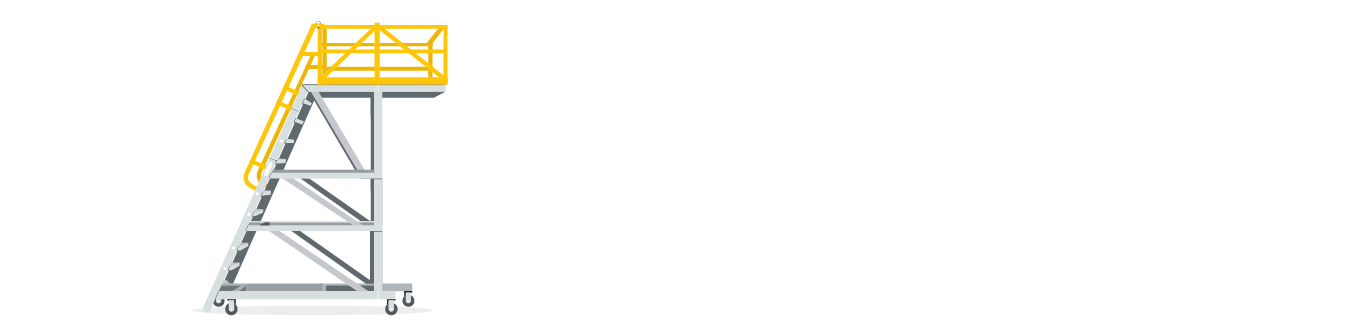
The Star Aluminium Modular Access Platform (MAP) is a configurable aluminium access system designed for industrial and commercial applications that require a custom working height, footprint or configuration. Unlike fixed-height platforms, the MAP system is assembled from structural components to match the specific requirements of the application.
Platform support frames are available in 1400mm and 1688mm widths, with 750mm and 1000mm depths. These configurations allow the system to be sized to the footprint needed for the task, from a single-operator standing position through to a wider deck suitable for multiple workers or material handling at height. The aluminium deck and extension deck components connect to the support frames to create the working surface.
The MAP system includes a full handrailing range: corner posts, side posts, middle posts, standard handrails and a platform gate for the access point. This gives a fully guarded working environment at the specified height. The stair connector and stair handrail components allow a stair access configuration to be incorporated into the platform where floor space permits.
The MAP system is appropriate for facilities that need a fixed or semi-permanent elevated access point that does not fit the height or footprint of a standard off-the-shelf platform. Common applications include assembly line access, machine inspection points, elevated maintenance positions and overhead access to plant and equipment in manufacturing environments.
Browse the full modular access platforms range for available components and configurations.
Fixed vs Portable Heavy Duty Platforms
The decision between a fixed and a portable platform configuration is one of the first questions to resolve in a heavy duty application. Both approaches are viable; the right choice depends on how the work is organised at the site.
Fixed platforms are appropriate when the access requirement is to a consistent point. A machine that requires regular maintenance at a specific height, a production line where workers need elevated access at the same position each shift, or an overhead service access point that is used repeatedly over a long period are all cases where a fixed or semi-permanent platform is the practical choice. The platform stays in position, which reduces the time spent setting up and removing access equipment between uses. The modular system is typically the appropriate product for this scenario because it can be configured to the specific height and footprint required.
Portable platforms are appropriate when the access requirement moves around the facility or when the platform needs to be stowed when not in use. Adjustable platforms, folding platforms and mobile platforms on castors all fall into this category. The trade-off relative to a fixed installation is that portable platforms impose some constraint on configuration, since they need to be stable when deployed and manageable when moved. For heavy duty portable requirements, adjustable work platforms are the relevant product category.
Some facilities operate both: a fixed modular platform at a permanent access point and a portable adjustable platform for tasks that move around the facility. The two categories complement each other and can both be sourced through the one supplier where the full range is available.
See the adjustable work platforms range for portable heavy duty options and the industrial work platforms range for the full category overview.
Heavy Duty Platforms in Manufacturing and Processing
Manufacturing and processing environments are where heavy duty work platforms are most commonly required. The characteristics of these environments drive the specification: continuous operation, high-frequency use by multiple workers across multiple shifts, overhead plant and machinery that requires regular inspection and maintenance, and worksites where safety management processes require documented equipment specifications.
In a manufacturing environment, a work platform is not used occasionally. It may be accessed dozens of times per day by multiple operators. The platform needs to perform consistently across that use frequency, which means the structural integrity, surface condition and guarding need to remain in acceptable condition throughout the service period between formal inspections.
Processing facilities, including food processing, chemical processing and industrial manufacturing, often have specific environmental requirements. Aluminium construction is generally resistant to the moisture and cleaning chemical exposure common in these environments, which is part of why aluminium platforms are widely specified for this sector.
The height range in manufacturing applications can vary considerably depending on the plant. The modular platform system accommodates this because the working height is determined by the configuration rather than fixed at manufacture. A facility with several machines at different heights can specify platforms to each access height individually.
Heavy Duty Platforms in Warehousing and Distribution
Warehousing and distribution environments use heavy duty platforms for different reasons than manufacturing. The primary use cases are elevated picking, packing and loading tasks, inventory access at height, and bay and racking inspection.
For elevated picking and order processing tasks, order picker platforms with castors, guarded decks, storage trays and stable wheel locks are the standard specification. These are designed for repetitive use across a full working day. The operator loads the platform with picked items, moves along the racking row and descends at the dispatch point. A platform that cannot reliably support this use pattern across hundreds of cycles per week will show wear and instability that affects both productivity and safety outcomes.
For inspection and maintenance tasks at racking height, a portable adjustable platform is often the practical choice because the inspection task moves along the rack row rather than staying at a fixed point. The adjustable platform can be set to the required inspection height and repositioned as the task progresses.
Selection Considerations for Heavy Duty Applications
When selecting a heavy duty work platform for an Australian industrial site, the following considerations drive the specification decision.
Working height is the starting point. This is the height from the floor to the operator's working position, not the platform deck height. The platform deck will be below the working position by the height of the operator's torso. Getting this calculation right determines whether the specified platform puts the worker in the correct position for the task.
Load requirement should include all loads that will be on the platform simultaneously: workers, tools, materials being worked on and any equipment operated from the platform. Heavy duty industrial platforms are specified with load ratings that account for these combined loads in a professional industrial context.
Access configuration affects which product category is appropriate. If the platform is accessed via a step configuration integrated into the platform unit, the step count and platform height need to correspond. If the platform is accessed via a separate stair or fixed ladder, the platform unit itself does not need a built-in step configuration.
Site conditions including floor surface, available footprint and whether the platform is fixed or portable all affect which product within the heavy duty range is the correct specification. For applications where the requirements are outside the standard range, the modular system offers the most configuration flexibility.
Browse the industrial work platforms range at AluminiumPlatforms.com.au, or contact the team at 1300 261 700 to discuss specifications for your application.
For access platform requirements specific to truck loading and dock operations, see the truck loading access guide. For guidance on selecting industrial ladders for Australian worksites, see the industrial ladder buying guide.