Work Platform vs Ladder: How to Choose the Right Equipment for Your Facility
Posted by Aluminium Platforms on 7th Jun 2026
Choosing between a work platform and a ladder is one of the most common access equipment decisions in Australian workplaces. Both serve a legitimate purpose, but using the wrong tool for the task introduces unnecessary risk and reduces productivity. This guide explains the key differences and helps you match equipment to application.
What a Ladder Does
A ladder is a portable climbing structure. Its purpose is to provide a path from one level to another, or to allow brief access to a height for a short task. On a ladder, the worker maintains three points of contact during climbing and typically uses the top rungs as a working position. This means at most one hand is free during work, the working position is narrow, and the task must be completed quickly before fatigue sets in.
Ladders are well-suited to tasks where:
- The job takes under a few minutes at height
- Only one hand is needed to complete the work
- The worker carries minimal tools or materials
- The height required is modest and the surface is stable
What a Work Platform Does
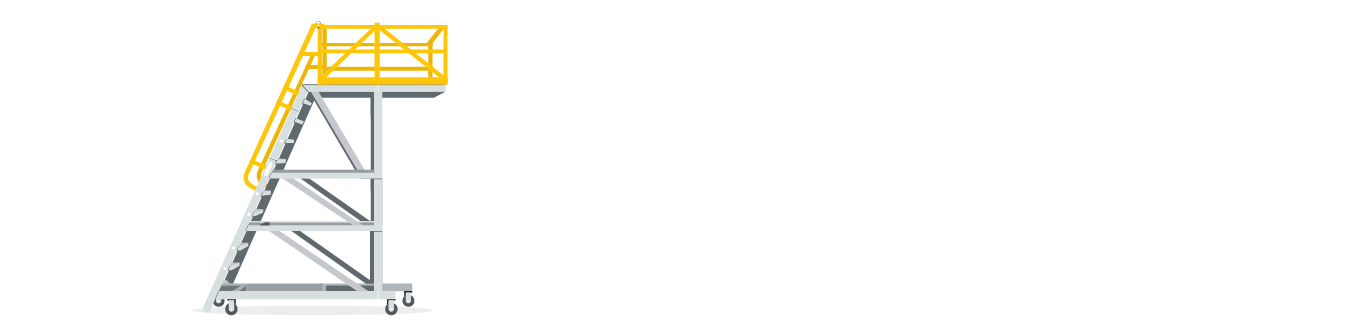
A work platform replaces the ladder entirely. Instead of climbing rungs to a working height, the operator walks up a staircase to a guardrailed deck. At the top, both hands are free. There is a solid floor underfoot. Tools can be placed on the deck. The operator can move around, turn, and reach without repositioning the entire unit. For tasks that take more than a few minutes, or that require both hands, a work platform is categorically safer and more productive than a ladder.
Work platforms are the better choice when:
- The task takes more than a few minutes at height
- Both hands are needed (installation, assembly, inspection)
- The worker carries tools, components, or materials up
- The work involves overhead reaching or detailed work at height
- The same height is accessed repeatedly throughout the day
The Safety Difference
Falls from ladders are among the most common causes of serious workplace injury in Australia. Most ladder falls happen not during climbing but during work at the top, when the worker shifts weight, overreaches, or loses balance while trying to complete a task. A work platform eliminates this risk category by providing a guardrailed standing area rather than a rung foothold.
The hierarchy of controls for working at height in Australian workplaces places passive fall prevention (guardrails, platforms) above personal protective equipment (harnesses) and above administrative controls (training, procedures). A work platform is higher on this hierarchy than a ladder. Where a platform can be used, it should be used.
Practical Comparison
| Factor | Ladder | Work Platform |
|---|---|---|
| Working position | Standing on rungs | Standing on full deck |
| Hands free | No (three-point contact needed) | Yes (guardrail surrounds deck) |
| Task duration | Short tasks only | Extended work periods |
| Repositioning | Quick to move | Rolls on lockable castors |
| Initial cost | Low | Higher |
| Long-term productivity | Lower for repeated tasks | Higher for repeated tasks |
| WHS compliance for elevated tasks | Conditional | Higher hierarchy of control |
When to Use a Ladder
Ladders remain the right tool for tasks where mobility and portability matter more than extended working time. Accessing a rooftop, climbing to a ceiling access panel, or reaching a single overhead fixture are classic ladder tasks. Extension ladders for outdoor and construction access, step ladders for light tradespeople work, and fibreglass ladders for electrical proximity work all serve legitimate daily purposes.
When to Use a Work Platform
In warehouse and manufacturing environments, the case for replacing mobile ladders with work platforms is strong. If your team accesses the same height multiple times per day, picks orders from elevated shelves, performs routine machine maintenance at height, or conducts regular facility inspections, a work platform reduces fatigue, reduces fall risk, and typically pays back its cost in productivity within the first year.
Star Aluminium P-series work platforms are available from 1-step to 12-step configurations, covering deck heights from approximately 1.4m up to 4.0m. ISO 9001:2015 manufactured with WHS compliance plates standard. Contact us to discuss the right configuration for your application.
Summary
Ladders are for access. Work platforms are for work. If the task at height takes more than a few minutes, requires both hands, or is repeated throughout the day, a work platform is the safer and more productive choice. If the task is brief, single-handed, and requires the equipment to be moved frequently, a well-rated ladder remains appropriate.
Have a specific application you're unsure about? Contact the Aluminium Platforms team. We'll help you identify the right equipment for your working height, load, and task requirements.